
wigginschilds

Seven Wiggins Childs Attorneys Named to The Best Lawyers in America® 2027
Wiggins, Childs, Pantazis, Fisher & Goldfarb, LLC is proud to announce that seven of our attorneys have been selected for inclusion in The Best Lawyers in America® 2027 edition. Three of them were also named "Lawyer of the Year" in their respective practice areas for the Birmingham, Alabama metro area, one of the highest honors Best Lawyers bestows, awarded to only a single attorney per practice area and community.

2027 Best Lawyers Honorees
- Samuel Fisher
- Dennis Pantazis
- Jon C. Goldfarb
- Rocco Calamusa
- Temple Trueblood
- Candis McGowan
- D.G. Pantazis, Jr.
2027 "Lawyer of the Year" Honorees
- Jon C. Goldfarb — Civil Rights Law, Birmingham
- Rocco Calamusa — Employment Law - Individuals, Birmingham
- D.G. Pantazis, Jr. — Mass Tort Litigation / Class Actions - Plaintiffs, Birmingham
Best Lawyers selects honorees through its Purely Peer Review® process: nominations come from other attorneys, and currently recognized lawyers in the same practice area and region then evaluate the nominees. Only about 5% of practicing U.S. attorneys earn inclusion in The Best Lawyers in America, and within each practice area and metro, just one lawyer receives the "Lawyer of the Year" distinction.
We congratulate our colleagues on this well-deserved recognition of their dedication to our clients and to the practice of law.
For more information, visit Best Lawyers.
No representation is made that the quality of the legal services to be performed is greater than the quality of legal services performed by other lawyers
Alabama jail inmate on suicide watch nearly dies of hypothermia, lawsuit claims
By Sarah Whites-Koditschek | swhites-koditschek@al.com
This article was originally published on AL.com.
A second Alabama jail inmate struggling with mental illness was found near death, with hypothermia, after being left for hours on a concrete cell floor, a lawsuit alleges.
The case centers around Joshua “Caleb” House, a man who, in 2024, was locked up in a jail in Calhoun County.
“Once again an Alabama man, through the deliberate indifference of those entrusted to care for him, was found in jail with a body temperature of 72 degrees, which should have killed him, but somehow he survived,” his attorney, Jon Goldfarb said in a statement.
House was locked in the jail on Nov. 2, 2024 after staying two nights at a psychiatric unit in Gadsden for issues related to his schizoaffective and bipolar disorders, according to the suit, filed in federal court this month by House’s court-appointed guardian, Melanie Daughtry.

The death of Tony Mitchell in Walker County in 2023 occurred under similar circumstances and led to an FBI investigation and 25 indictments. Both House and Mitchell were taken to nearby hospitals with body temperatures of 72 degrees after developing hypothermia, according to lawsuits in both instances. However, Mitchell did not survive.
Defendants named in House’s suit are Sgt. Cody Davis of the Calhoun County Sheriff’s Office and QCHC, INC., a Birmingham-based company that provides healthcare to correctional institutions. Davis could not be reached for comment and QCHC did not respond to a request for comment.
According to the suit, on Nov. 13, 2024 House was put in a suicide watch cell by himself and was denied medical care for eleven hours by Sgt. Davis. The suit alleges a mental health provider tried to visit House but was unable to because there was no officer there to escort the therapist to the cell.
Caleb House, seen here with his mother, is suing Alabama
authorities, alleging he suffered hypothermia in a local jail.
“Defendant Davis prevented health care practitioners… from accessing (House) in deliberate indifference to (his) serious medical needs,” the complaint states.
The jail’s suicide watch protocol required House to be assessed every four hours, according to the suit. A few weeks later, on Dec. 2, jail medical records by a physician noted House was not doing well:
“Downhill course since intake—has been placed on (suicide watch) voicing that he was suicidal… progressed to peeing on floor and wrapping… in blanket & lying in urine—scheduled to see provider today.”
The suit alleges that House was not able to regulate his body temperature on suicide watch because his clothes had been taken away, he was wearing a fabric turtle suit, a garment for people on suicide watch, and was in a cell with a cold, concrete floor.
The suit alleges that care providers employed by QCHC did not record that House had urinated on the floor and was lying in his urine in their Medical Observation Record. While the record states vital signs should be documented every eight hours at minimum, there were none in his medical records from QCHC.
“All health care providers employed by defendant QCHC are aware of the substantial risk of harm that inmates may become hypothermic while lying naked on bare concrete,” the complaint states.
Despite experiencing hypothermia, lying on the floor of his cell, the QCHC observation record notes “no needs voiced” by House on Dec. 2 at 9:30 a.m., about thirty minutes after he was given medication, according to the suit. There were no other entries in the record on that day until 6:30 p.m. when he was found and seen by a jail physician, Dr. Hurley, an employee of QCHC, according to the suit.
“(The nurse) cannot account for his activity from 9:00 a.m. to 6:00 p.m. but states that he ‘has been alone,’” a doctor wrote in his medical record at the hospital, according to the suit.
House was taken to the emergency room at the Gadsden Regional Medical Center and arrived at 7:32 p.m. with a diagnosis of “severe hypothermia, hypotension and bradycardia possibly related to sepsis.” In the ER he was found to be unresponsive with a temperature of 72.7 degrees and a heart rate in the 30s.
He spent several days on a respirator before being discharged on Dec. 11, the suit alleges. His discharge diagnosis included several significant medical issues: severe sepsis with septic shock, Bibasilar pneumonitis, severe hypothermia, hypotension and bradycardia possibly related to sepsis, Lactic Acidosis, Metabolic encephalopathy, Transaminitis and Thrombocytopenia.
House survived. In Mitchell’s case in 2023, however, the inmate died of hypothermia in the Walker County Jail while on suicide watch in a cell with concrete floors in a cell nicknamed “the freezer”. Mitchell also had a history of mental illness.
A federal investigation led to 25 indictments and changes at the jail, such as sensors installed to monitor inmates’ heartbeats and breathing.
Federal Court Authorizes Notice in Lawsuit Challenging AI Hiring Software for Potential Age Discrimination - Act by March 7, 2026
SAN FRANCISCO, CA — February 17, 2026 — A federal court in the Northern District of California has authorized notice to potential class members in Mobley v. Workday, Inc., a collective action alleging that artificial-intelligence-driven hiring software may have unlawfully screened out job applicants aged 40 and older. Individuals who may be affected have until March 7, 2026 to opt-in.
The lawsuit challenges the use of A.I. automated recommendations and screening technologies in hiring decisions. According to the complaint, Workday’s platform used by numerous employers to process and evaluate job applications, ranked or rejected certain applicants in ways that disproportionately affected older workers, raising questions under the Age Discrimination in Employment Act (ADEA).
The case is among a growing number of legal challenges examining whether algorithmic hiring tools can produce discriminatory outcomes even without explicit intent. Courts and regulators have increasingly scrutinized A.I. automated employment systems as companies rely more heavily on software to evaluate applicants at scale.
The court has authorized notice to individuals who applied for jobs through Workday's platform since September 24, 2020 and were age 40 or older at the time of application. Eligible individuals may submit a consent form if they choose to participate in the collective action. The deadline to respond is March 7, 2026 and opt-in forms may be submitted on workdaycase.com. Additional information, including eligibility details and court-approved materials, is also available at workdaycase.com.
Counsel For Plaintiffs:
Wiggins Childs Pantazis Fisher &
Goldfarb, LLC
The Kress Building
301 19th Street North
Birmingham, AL 35203
Winston Cooks, LLC
420 20th Street North, Suite #2200
Birmingham, AL 35203
Court: U.S. District Court, Northern District of California
Case: Mobley v. Workday, Inc., No. 3:23-cv-00770-RFL
Deadline: March 7, 2026
Website: workdaycase.com
Contact: For questions, visit workdaycase.com, email info@workdaycase.com or call (205)
482-5174.
Jon Goldfarb at Aspen Ideas: Championing Civil Rights and Equal Pay
When the Aspen Ideas conference convenes, it attracts some of the most influential thinkers, leaders, and advocates from around the globe. This year, among the distinguished speakers was Jon Goldfarb from Wiggins Childs Pantazis Fisher Goldfarb (“Wiggins Childs”). Goldfarb’s appearance was highly anticipated, given his storied career and his pivotal role in landmark cases that have shaped the landscape of employment law and civil rights in America. He was joined along stage with the award-winning actress, Patricia Clarkson, who played Lilly Ledbetter in the feature film, Lilly.
The Aspen Ideas conference is a gathering of visionaries who come together to ignite conversations on the most pressing issues of our time. This year’s themes included prosperity reimagined, breakthroughs and innovations, and what it means to live a good life. It was within this context that Jon Goldfarb took the stage.
At the conference, Goldfarb spoke about the ongoing struggle for equal pay and civil rights in the workplace. Drawing from his personal experience representing Lilly Ledbetter, he recounted the challenges faced by individuals who confront discrimination and the systemic barriers that persist even today. Goldfarb’s talk highlighted several key points:
- The Personal Cost of Injustice: He shared how Ledbetter’s years of underpayment at Goodyear were not just a matter of lost wages, but a profound injustice that affected her family and future.
- The Power of Legal Advocacy: Goldfarb illustrated how a single case, when championed with skill and determination, can lead to national legislative change, as seen with the Lilly Ledbetter Fair Pay Act.
- Continuing Barriers: Despite progress, Goldfarb emphasized that pay discrimination and workplace harassment remain widespread. He called on attendees to remain vigilant and proactive in their own organizations.
- The Importance of Storytelling: By sharing real stories—like Ledbetter’s—Goldfarb believes advocates can humanize the statistics and inspire action among policymakers and the public.

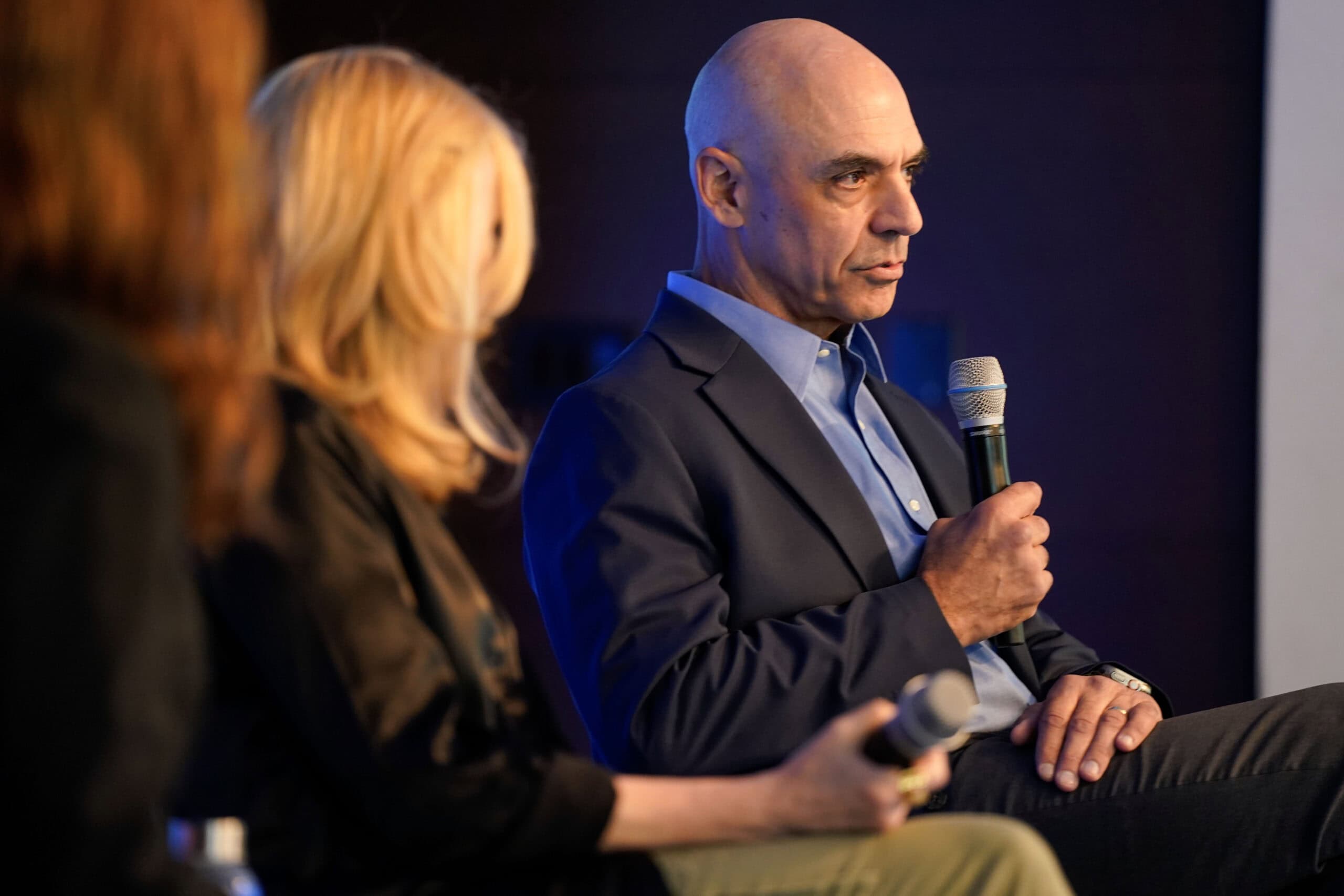


Jon Goldfarb’s appearance at the Aspen Ideas conference was more than just a speech—it was a call to action. By sharing his experiences and insights, he challenged attendees to look beyond the status quo and commit to building workplaces—and a society—where equal pay and civil rights are not just ideals, but realities.
To see the entire presentation, check out the video below:
Lilly Ledbetter Movie to Debut in Theaters May 9, 2025
Wiggins Childs is excited for the story of Lilly Ledbetter, represented by Jon Goldfarb, to come to a theater near you.

“Lilly” is based on the remarkable story of Lilly Ledbetter, a hard-working Alabama tire factory supervisor at the Goodyear plant in Gadsden, Alabama. Her singular goal is to lift her family into the middle class. Having grown up in poverty, she endures a work environment plagued by pervasive harassment for the sake of the best paycheck in her county. But as retirement approaches, Lilly discovers that the system has been cheating her, paying her close to half of what the men with the same job were earning.
Outraged, Lilly fights this injustice to the Supreme Court, the corridors of Congress, and eventually The White House—all while powerful forces try to shut her down. Lilly follows the transformation of an ordinary citizen into the face of a movement, illuminating the impact a single courageous person can have. Lilly is a powerful new feature film starring Academy Award nominee Patricia Clarkson, based on the life and legacy of equal pay trailblazer Lilly Ledbetter. Jon Goldfarb is played by Thomas Sadoski.
Only in theaters on May 9th.
Sidewalk Cinema
1821 2nd Avenue North
Bham, AL 35203
Temple Trueblood named in Top 50 Women Mid-South Lawyers for 2024 as Super Lawyer
Wiggins Childs Pantazis Fisher and Goldfarb (“Wiggins Childs”) is pleased to announce that Temple D. Trueblood has been selected as a Super Lawyer among the 2024 Top 50 Women Attorneys in the Mid-South by Super Lawyers for her practice in Employment Litigation, Employment & Labor, and Civil Rights.
12 other Attorneys at Wiggins Childs were included on the list of Best Lawyers and Rising Stars by superlawyers.com:
Rocco Calamusa, Jr. – Selected to Super Lawyers 2024.
Robert J. Camp - Selected to Super Lawyers 2024.
Lacey Danley – Selected to Rising Stars 2024.
Jon C. Goldfarb - Selected to Super Lawyers 2024.
Sidney M. Jackson – Selected to Super Lawyers 2024.
Kevin W. Jent - Selected to Super Lawyers 2024.
Nicki Lawsen – Selected to Rising Stars 2024.
Candis A. McGowan - Selected to Super Lawyers 2024.
Dennis G. Pantazis - Selected to Super Lawyers 2024.
Patrick L. Pantazis – Selected to Rising Stars 2024.
D.G. Pantazis Jr. – Selected to Rising Stars 2024.
L. William Smith – Selected to Super Lawyers 2024.
Congratulations to all of our Super Lawyers here at Wiggins, Childs, Pantazis, Fisher, & Goldfarb!
AMTRAK RACE DISCRIMINATION LITIGATION
Employment Litigation in the District Court for the District of Columbia:
Campbell, et al. v. Amtrak, 1:99CV02979 (EGS) – SETTLED
The long-running case Campbell, et al. v. Amtrak, originally filed in November 1998, has been settled. We are gratified to have reached a resolution of the case for our Campbell clients. The Campbell case demonstrates the long-term commitment Wiggins Childs Pantazis Fisher Goldfarb has to its clients and to the cause of civil rights. We congratulate the Campbell clients on their settlement, and thank them for retaining WCPFG to represent them.
Williams, et al. v. Amtrak, 1:21CV1122 (EGS)(MU) – ACTIVE AND ONGOING
Because the Campbell classes were not certified by the Court, approximately 275 of the former members of the putative, i.e., uncertified, classes as defined in the Campbell, et al. v. Amtrak case, filed their own individual-multi-plaintiffs case in 2021. Williams, et al. v. Amtrak is not a class action. The Williams Plaintiffs are comprised entirely of persons who would have been in the Campbell classes if they had been certified, but they were not certified.
Amtrak has tried to get the Williams case, or parts of it, dismissed on a variety of grounds, some of which the District Court has rejected, and some of which are still pending. The case has evolved somewhat, and now has approximately 168 Plaintiffs. Some plaintiffs exited the case because they either decided not to proceed, fell out of touch with counsel and could not be located, or died (if the personal representative of the estate was either unwilling to proceed or has not been found). We filed a Third Amended Complaint (“TAC”) in July 2023 addressing the claims of these 168 Plaintiffs.
Amtrak then filed a Motion To Dismiss or in the Alternative, for Summary Judgment, together with a Memo of Law, a Statement of Facts, and a number of exhibits (MTD Exhibits A-E). We filed a Plaintiffs’ Opposition to same, with a Counter-Statement of Facts and other exhibits. Amtrak filed its Reply (Reply Exhibit 2), and we supplemented our Opposition, so the Motion is fully briefed.
The basic issue behind the Motion To Dismiss is which Plaintiffs and which of their individual claims, can remain in the case. This Motion is now pending before a Magistrate Judge, who will issue a ruling, probably in the form of a “Report and Recommendation,” that goes to the District Judge for review. Both sides will then have an opportunity to file Objections to the Report and Recommendation, and to respond to the other side’s objections. The District Judge will then consider whether to adopt the Report and Recommendation or reject it, or some combination of each, and it is this decision that will determine whose claims are dismissed, in whole or in part. Those whose claims are dismissed will have the right to appeal.
We have filed some motions to substitute estates for a few individual Williams Plaintiffs who have, sadly, died. Amtrak opposes those motions, also. The Court has not ruled on any of those motions, either.
Attached is the Williams, et al. v. Amtrak docket sheet docket sheet, as of February 11, 2026.
What’s Next? Many of you have asked when the Court will decide the pending Motion. We simply do not know. It is a very complex motion, and there are many issues and arguments to consider. Although it may seem like a long time has passed, it has not been an unusually long period of time for a complex motion such as this. The Court determines its own schedule and rarely announces when any decision is forthcoming. Further, we cannot ask for the simple reason that it will not do any good and such inquiries are not allowed by the Court. In fact, parties are not supposed to contact the judge’s chambers either by phone or letter or email for any reason except an emergency. Please understand that the time passage since the briefing was completed near the end of December, 2023, is not altogether unusual in the federal courts in a case of this size. However, we do recognize that it has been quite a long time, so we are hopeful we are close to a decision, but there is no way to know. There is a lot of high-stakes litigation in Washington D.C. at present due to current events, so we will just have to be patient. Please do not take it upon yourself to contact the Court because it would be highly inappropriate to do so and it will not get any answer, and please do not ask me to do so, for the same reasons. When the Report and Recommendation is issued, it will be posted here.
Settlement? Amtrak knows the Plaintiffs’ side is open to settlement discussions and negotiations: we always have been. However, it takes both parties to engage in a negotiation, so we will have to see if time or developments, perhaps a ruling on the Motion To Dismiss, encourage Amtrak to negotiate. We were able to bring the Campbell case to a resolution through mediated negotiations, and we believe Williams can be resolved by good faith negotiations, too.
For all named Plaintiffs in Williams, et al. v. Amtrak:
- If your physical residence address (not P.O. Box) is now different from what is listed in the caption of the THIRD AMENDED COMPLAINT, please contact lead counsel, as indicated below.
- If your other contact information, including mailing address, telephone number(s), or email address(es) have changed in the past two years, please contact lead counsel.
- If you are a named Plaintiff in Williams, listed above, but have not been able open or download the Update Letters sent out since June 1, 2023, please contact lead counsel.
- If you are a named Plaintiff in Williams, listed above, please read the Update Letters carefully and thoroughly.
- Please remember that the Update Letters, and all communications to and from your lawyers, are PRIVILEGED AND CONFIDENTIAL and not to be shared with anyone else and are not to be uploaded or discussed on any type of social media.
- If you have any questions about this, or anything else regarding the case, please communicate directly with lead counsel, as indicated below, or with the staff of Wiggins Childs.
- Please note that the Washington Lawyers’ Committee for Civil Rights and Urban Affairs, which was our co-counsel in the Campbell case, is NOT involved in Williams at all. If you contact the WLC, they will simply direct you to Wiggins Childs.
- If you are listed as a Plaintiff in the Third Amended Complaint in the link above, but you do not want to be in the Williams, et al. v. Amtrak case, please contact lead counsel.
- No additional plaintiffs will be added to the Williams, et al. v. Amtrak
- Named Plaintiffs: please watch your email for more Updates and check this web page periodically for other news and posted documents.
** Please note that some of these documents have some information redacted. That is because those portions reveal information that, by agreement of the parties, must be kept private, and/or because they contain sensitive personal information. If you believe you are subject to these redactions and want to know more about it, please contact your attorney, Timothy B. Fleming.
Lead Attorney in the Washington, D.C. office for Williams, et al. v. Amtrak:
Timothy Fleming, of counsel
Wiggins Childs Pantazis Fisher Goldfarb, PLLC
2208 18th Street, N.W., # 110
Washington, D.C. 20009
Email: tfleming@wigginschilds.com
Office phone no. (for voice mail only): (202) 467-4489
Fax no.: (205) 453-4907
Wiggins Childs Lawyers Victorious in Voting Rights Lawsuit Before Supreme Court
On Thursday, June 8, 2023, the Supreme Court of the United States held in Allen v. Milligan that the Alabama state legislature’s congressional districting map likely violates the Voting Rights Act of 1965. The 5-4 decision is a major victory for voting rights. Wiggins Childs is proud to have played a role on the brilliant legal team that successfully litigated this historic case from its inception in Alabama to the United States Supreme Court in Washington D.C.
The Voting Rights Act prohibits the “denial or abridgment” of a United States citizen’s right to vote based on race. Thus, a state’s political process should be “equally open” to all voters without diminishing the participation of any minority group. The Court’s opinion, authored by Chief Justice John Roberts, affirmed the lower decisions of the District Court for the Northern District of Alabama in the Caster case, and of the three-judge District Court in the Milligan case. In doing so, the Court upheld that Alabama’s new districting plan engaged in the prohibited practice of racial gerrymandering. Despite Black residents totaling 27% of voting-age citizens in Alabama, only one out of the seven districts in Alabama’s congressional map held a Black majority. Alabama consolidated a large number of Black voters into this single district, which principally mirrors the western section of Alabama’s “Black Belt” region. The remainder of Black voters were scattered within the other six districts’ white majorities. The Court ruled this districting plan established racial gerrymandering and violated the Voting Rights Act.
This case is a major victory in preserving the sentiment of the Voting Rights Act nationwide and preventing the unjust practice of racial gerrymandering. By holding that Alabama violated voting rights, the Court acknowledged both racial injustice and, more specifically, the weakening of Black voters within the state. Moreover, the Court not only rejected Alabama’s map, but simultaneously rejected the state’s argument that the Court should consider a “race neutral benchmark” for districting schemes. Had this “race neutral benchmark” been adopted, Alabama’s proposed interpretation could have prevented future challenges to congressional maps based on unjust and racially discriminatory suppressions of political power.
Deuel Ross, Deputy Director of Litigation at the NAACP Legal Defense and Educational Fund, delivered the victorious argument in front of the Supreme Court.
Wiggins Childs attorney, Sidney Jackson, played a crucial role in this litigation, serving as co-counsel on the litigation team and local counsel for the out of state forces heading this civil rights battle, including the NAACP Legal Defense Fund (LDF); the American Civil Liberties Union (ACLU); Hogan Lovell law firm; and the Southern Poverty Law Center (SPLC).
Each year, the Supreme Court of the United States receives an average of 7,000-8,000 requests for appeal. Only around 1% of these appeals are granted and argued in front of the court.
Alabama inmate ‘literally baked to death’ in overheated prison cell, says lawsuit
AL.com, 12/15/2022
Thomas Lee Rutledge, 44, died alone in an Alabama prison cell two years ago, sitting with his face pressed to his window, trying to breathe in cold air, as the heat piped into the mental health unit rose to an extreme level, and according to a federal lawsuit, “he was literally baked to death in his cell.”
The federal lawsuit over Rutledge’s death alleges prison guards did nothing the night of his death, despite knowing of the extreme heat in the prisoners’ cells. Lawyers argue officials at William E. Donaldson Correctional Facility near Birmingham also knew the heating system in the mental health dorm, the T-unit, was broken, they knew other men had died from extreme heat due to a broken heater, and still left the men, many on psychotropic medications that made them especially vulnerable to heat, to “bake” in their cells.
According to an updated complaint filed in U.S. District Court two weeks ago, corrections investigator Clark Hopper was on the T unit the night Rutledge died from hyperthermia. Hopper opened another inmate’s tray door to speak with him, and, in a recorded interview, the investigator recalled it was like “opening an oven and when you (are) getting something out of the oven it hits your face.” He said: “When he dropped his (meal door), it was, it was just, pardon the language, but it was hotter than three hells when it dropped.”
The updated complaint spends much of its 58-pages breaking down how the heating system failed and claiming there were many ways in which the problem was ignored, overlooked, made worse or mismanaged by numerous parties, from guards to prison officials to private contractors.
Alabama Department of Corrections declined to comment for this story due to pending litigation.
The suit says Rutledge was found on December 7, 2020, with a body temperature of 109 degrees, “in his cell sitting near the window of his cell with his head/face out the window believed attempting to breath/obtain cool/cold air,” according to an autopsy which deemed his death an accident. Rutledge’s attorneys argue it was not an accident.
The lawsuit was first filed in federal court on Feb. 21, 2021, on behalf of Rutledge’s estate and his sister LaVentra Rutledge. It alleges cruel and unusual punishment in violation of the Eighth Amendment and seeks damages. The case is before Judge R. David Proctor in Alabama’s Northern District.
Judge Proctor is also hearing a case brought by the U.S. Department of Justice against Alabama for unsafe conditions throughout the men’s prisons.
“We are just trying to uncover the truth of what happened that resulted in Mr. Rutledge suffering such a horrible death,” said Jon Goldfarb an attorney who represents Rutledge’s estate.
Not the first death
Prison wardens and other officials knew of the risk to inmates, the lawsuit alleges, because at least two other prisoners died from the heat on the T-unit in recent years.
According to the lawsuit, on December 8 of 2019, Deborah Cook, director of Mental Health Services at Donaldson, sent an email reporting an inmate’s death from similar circumstances. The inmate, also on psychotropic medication, had an initial core temperature of 109.7 and a temperature of 108.1 about 40 minutes after dying.
“Extremely high post-mortem temperature is recognized as a sign of a neuroleptic syndrome which could have led to his death. The (health services) has contacted the institution to check the heat temperature of the cells in the T unit. It has been several years ago, but we had a major dysfunction of the boiler at Donaldson in T housing dorm, which lead to a fatal case.”
A coroner’s report on Rutledge’s death stated the men in the T-unit never leave their cells, according to the lawsuit. They eat and shower in their rooms. The cells have heating vents, but there is no way to control them, and according to the suit, in the weekend leading up to Rutledge’s death, inmates stuffed their clothes into the vents to minimize the hot air.
The lawsuit alleges on the weekend of December 5, and 6, prisoners on the T-unit complained about the hot temperatures. On the night of December 7, a moderate day, according to the lawsuit, with outdoor highs in the mid-40′s and a low of about 30 degrees, the system’s heating loop exceeded 130 degrees.
“Human beings cannot survive without remedial measures in temperatures above 101-104 for extended periods of time,” the complaint states.
Psychotropic medications, which many of the men on the T-unit were on, impair the body’s ability to regulate its temperature.
According to the lawsuit, at 8:20 p.m. that evening, an inmate alerted an officer that Rutledge was unresponsive in his cell. Between 8:28 p.m. and 8:57 p.m. medical staff attempted CPR. By 9:10 pm an ambulance arrived, and minutes later Rutledge was declared dead.
At 9:40 pm, a chaplain called his mother to tell her.
More than half his life in prison
Thomas Lee Rutledge spent over half his life in an Alabama prison for a double murder he committed as a juvenile in 1993. A paranoid schizophrenic, Rutledge at age 17 shot two young men to death in the early morning hours after a small gathering of young men smoked marijuana together at the house of one of their grandmothers.
Originally, he was sentenced to life without parole. In 2016, the U.S. Supreme Court ruled that that inmates serving life without parole for murders committed when they were juveniles should be resentenced with a chance at parole. Rutledge was resentenced in 2017.
He was slated for release in 2024 when he hoped to move to Alaska with his mother.
But the suit alleges when the prison updated its air conditioning system, it fixed the surrounding units’ heat to be controlled remotely and the T-unit boiler system wasn’t updated. The suit contends contractors damaged it further during renovations. Lawyers for Rutledge claim the wardens and officers failed to institute policies requiring officers to take measures to cool inmates, and that the wardens failed to require training.
“Prison officials, including Warden Phyllis Morgan and Warden Kenneth Peters, had long been aware of problems with the boiler that posed a substantial risk of serious harm to incarcerated persons,” the suit says.
Attorneys for the wardens did not respond to a request for comment. “The Correctional Wardens explicitly deny that they violated the Eighth Amendment to the U.S. Constitution in any respect whatsoever,” they stated in their answer to the complaint.
The Alabama Department of Corrections, initially named in the suit, has been dropped from the case. The suit still names several other prison employees and several private contractors.
The corrections employees are arguing they are protected by qualified immunity, a claim that has not yet been resolved. A trial date has not been set.
“Living and breathing” checks
The suit also contends guards took no action despite the heat. Officers at Donaldson are responsible for monitoring temperatures in inmates’ cells, according to the complaint.
The staff working the evening of Rutledge’s death did hourly “living and breathing” checks and nightly “security checks” and noted that everything was fine, despite the extreme heat, the suit alleges.
“The excessive heat far in excess of 100 degrees was obvious to officers who conducted living and breathing checks or security checks or who otherwise interacted with inmates in their cells,” the complaint stated.
Officers Christie Sansing, John Rogers, Charles Dean and Geoffrey Griffin, all named as defendants in the case, worked the night of Rutledge’s death. Officers Dean and Griffin helped inmates shower that night, the complaint states, but otherwise took no action to address the deadly heat, the suit alleges.
All four officers denied responsibility for Rutledge’s death in their answers to the lawsuit, and all four claimed immunity from suit.
Officer Rogers did “living and breathing” checks at 4:04 p.m. and 5:05 p.m. and a security check at 4:35 p.m. Officer Dean did a security check at 5:35 p.m. and “living and breathing” checks at 6:05 p.m., 7:05 p.m., and 8:05 p.m. and noted, “all 96 units alive & well and “all 96 units secure.”
Officer Griffin security checks at 6:35 and 7:35 p.m. and reported “all 96 units secure.”
Rutledge was already experiencing life-threatening heat at this point, the lawsuit alleges. At 8:30 p.m. an inmate reported to an officer that Rutledge was not responsive.
According to the lawsuit, the prison’s Psychotropic Medications and Heat Policy states that if temperatures in a cell or housing area rise to 90 degrees, inmates should be moved to a cooler cell or area and the shift commander and health services should be notified. If the inmates are too hot, above 85 degrees, staff should also offer fans, fluids, ice and extra showers.
Piecemeal repairs backfire, lawsuit claims
In 2019 and 2020, the prison added a new heating unit for seven dorms in the same building as the T Unit, says the suit. Temperatures on the new system could be controlled remotely for the seven dorms that got the upgrade, but not for the T Unit, where the mentally ill inmates were held.
The heater for the T Unit had to be controlled in the mechanical control room, according to the complaint. The complaint lists numerous private contractors, arguing mistakes and ill-fated decisions during repairs made it so temperature could not be controlled properly, leaving a continuous flow of hot air in the wintertime in the T unit whenever the system is on, making it impossible to prevent overheating.
In their responses to the lawsuit and in response to calls from AL.com, the contractors denied responsibility for the situation.
Plant maintenance supervisor Billy Kennedy, also named as a defendant, was the person managing repairs, the complaint alleges. An attorney for Mr. Kennedy did not immediately respond to a request for comment.
“Kennedy denies that he was deliberately indifferent or acted with malice towards Rutledge,” his answer to the lawsuit stated. “Kennedy also denies that Plaintiff is entitled to damages or relief against him.”
According to the complaint, Kennedy said in a recorded statement to investigator Clark Hopper that the inmates had been complaining about the heat all weekend prior to Rutledge’s death.
Kennedy measured the unit’s temperature on Mondays, and he would have measured it that day, according to the complaint. “Nonetheless, Kennedy failed to shut down the boiler or alert prison officials,” the complaint stated.
Since the lawsuit began, evidence from the boiler room has been destroyed, the complaint alleges. On September 22, 2021, Rutledge’s lawyers requested the boiler logs kept by Kennedy. The department objected and did not release the logs. According to the suit, Kennedy testified those records were destroyed in a flood caused by a burst water pipe.
Wiggins Child’s Attorneys Named Top Attorneys by Birmingham Magazine
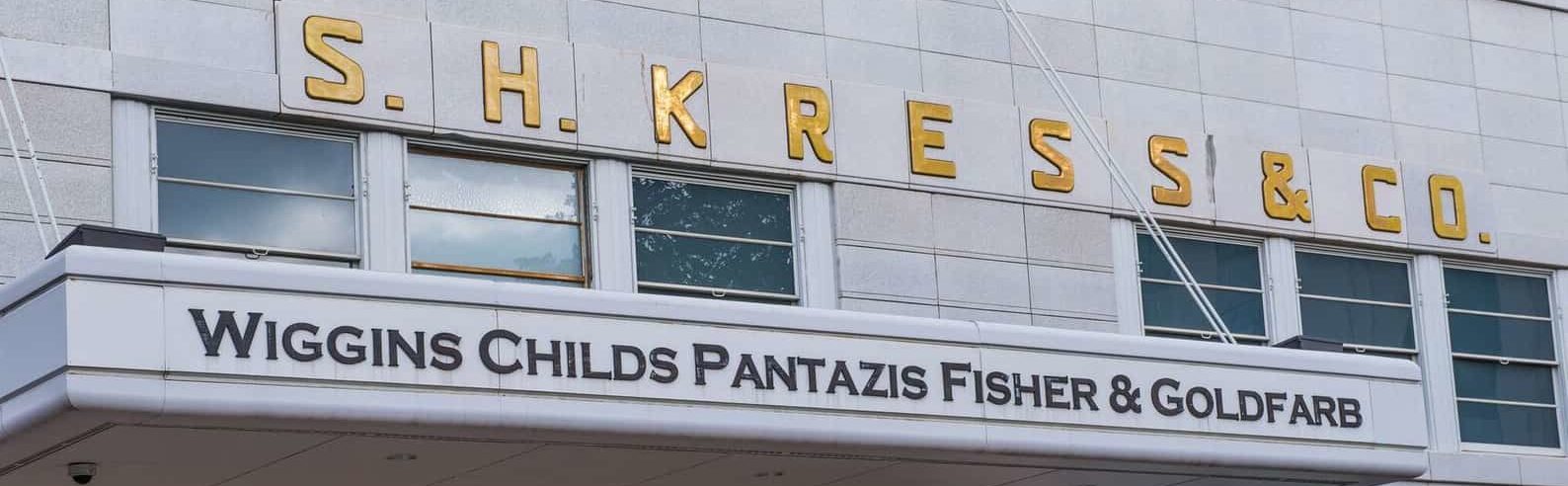
Wiggins, Childs, Pantazis, Fisher, & Goldfarb is proud to announce that three of the firm’s lawyers were named 2020 Top Attorneys of Birmingham.
Birmingham Magazine conducted its eleventh annual peer-reviewed survey, asking more than 4,000 local attorneys and registered members of the Birmingham Bar Association for their nominations. Attorneys were recognized for their experience and knowledge within 35 practice areas.
The WCPFG attorneys selected as Top Attorneys of Birmingham include:
Jon C. Goldfarb top attorney in
Brian Clark top attorney in
Sidney M. Jackson top attorney in
Civil Rights, Employment, Labor & Employment Law



The complete list of Top Attorneys appears in the April 2020 issue of Birmingham Magazine.